Two Hundred Years from Now
What mortality reveals about meaning, memory, and what we leave behind

How life history theory and Bill Perkins’ Die With Zero converge on the same uncomfortable arithmetic.
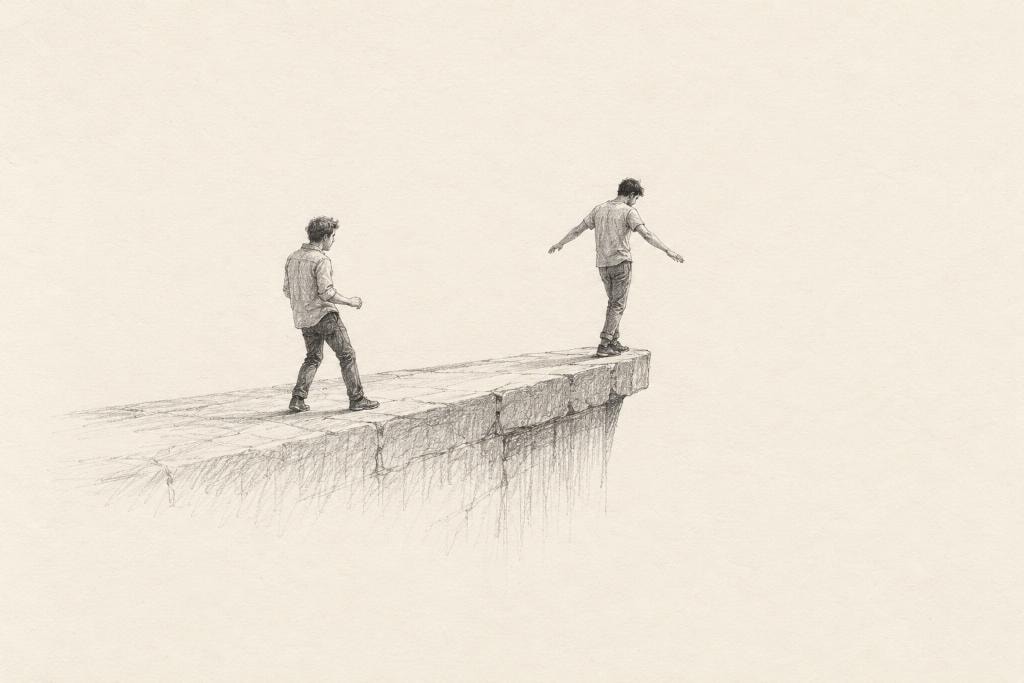
A century from now you will be dead, and so will every person you currently know. Two centuries out, your name will not surface in any conversation; a family you cannot picture will sleep in the room you sleep in tonight; whatever you own will have been sold, donated, broken, or absorbed into a stranger’s collection. These are not morbid claims. They are baseline demographics. The behavioral puzzle worth sitting with is why most humans, given this information, still behave as if it were not so.
The puzzle
We are, as far as we know, the only species that hoards across decades for a future we will not personally inhabit. Other animals cache for the season; we cache for grandchildren we have not met. Inheritance, monuments, brand names, pension accounts, the careful arrangement of a will, the family business passed across three generations: all of it points to a creature with a forecasting horizon that routinely exceeds its own life horizon. That gap is the source of a lot of meaning, and also a lot of avoidable suffering.
Two competing hypotheses are worth holding in mind. The first is adaptive: legacy behavior pays off in inclusive fitness through kin investment, indirect reciprocity, and status that compounds across generations (Alexander, 1987; Hawkes et al., 1998). The second is a byproduct argument: the cognitive machinery that makes human long-range planning useful in foraging, alliance-building, and craft has been amplified by industrial-era institutions—mortgages, retirement accounts, public companies—into horizons that no longer track fitness at all. Both can be true at once. The interesting question is when each one dominates.
The mismatch between forecasting horizon and life horizon
Human behavioral ecology (HBE) and life history theory frame the issue cleanly. Humans are an unusual primate in that we invest very heavily in what Hillard Kaplan and colleagues call embodied capital—skills, knowledge, networks, and accumulated resources that take decades to build and pay off late (Kaplan, Hill, Lancaster, & Hurtado, 2000; Bock, 2002). That investment strategy is adaptive when life is long, uncertain, and cooperative, because the late-life returns can be transferred to kin through alloparenting, knowledge transfer, and material support (Hrdy, 2009).
The strategy becomes incoherent when applied to a stage of life that does not exist for the person doing the planning. Time discounting evolved to negotiate real horizons, the kind a person can plausibly act inside (Frederick, Loewenstein, & O’Donoghue, 2002). Conscious cultural planning routinely stretches well past the actor’s own death. The wealth manager and the religious patron and the ambitious dynastic founder are all running the same circuit on horizons their ancestors never had to model. We should expect that circuit to misfire.
Competing hypotheses
H1 (adaptive legacy): Accumulation past one’s life expectancy increases inclusive fitness through kin transfers and durable reputation. Wealth left to grandchildren and great-grandchildren should correlate with measurable descendant outcomes (survival, fertility, status), and accumulators should be those with kin most able to absorb the transfer.
Prediction: Industrial-era institutions stretch a planning system that evolved for shorter horizons. Accumulation past mid-life should weakly track inclusive-fitness outcomes and strongly track local status competition and culturally transmitted scripts. A discriminating test would compare lifetime accumulation curves and transfer timing across societies with very different inheritance institutions, then track descendant outcomes through at least two generations.
H2 (cultural overshoot): Prediction:
Why the math does not bite
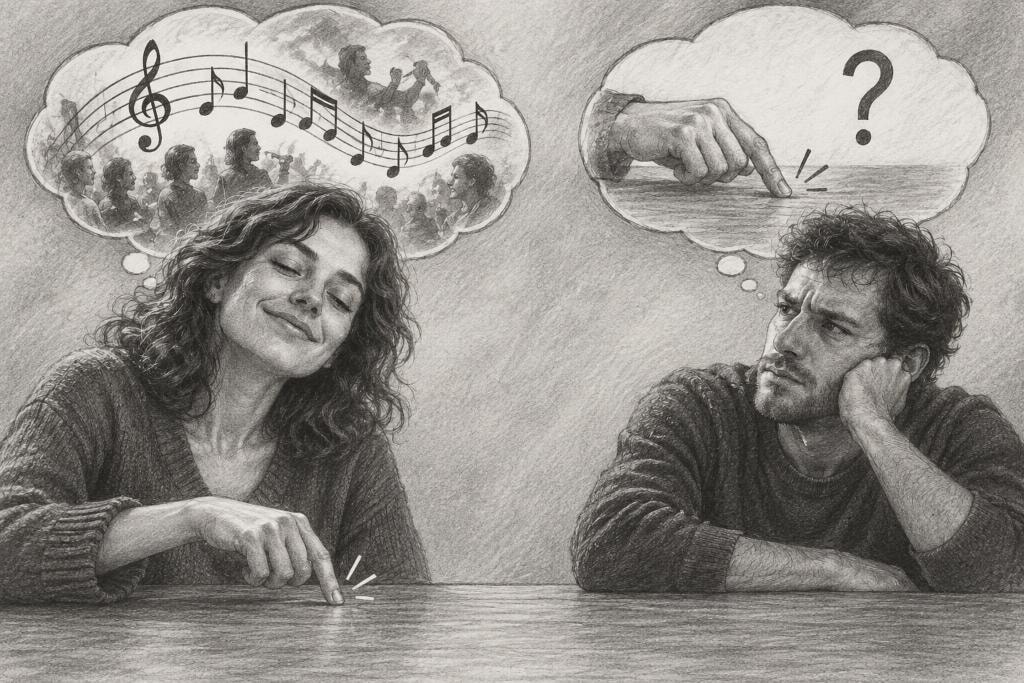
Knowing the demographic facts is not the same as acting on them. The proximate machinery argues against it. Mortality salience reliably triggers defensive responses in experimental work; people push the thought away or convert it into something more abstract (Pyszczynski, Greenberg, & Solomon, 1999). Hyperbolic discounting makes future selves easy to underweight, even on lifespans we will plausibly reach (Frederick et al., 2002). Status competition runs in a local frame, and neighbors do not die when we do, so the game feels indefinitely long. Cultural transmission keeps the accumulation script intact even when individual circumstances do not justify it (Boyd & Richerson, 1985; Henrich, 2016).
Evidence: the experimental and survey work on mortality salience and time discounting is robust enough to take seriously. Interpretation: these mechanisms together produce a predictable pattern in which humans systematically over-save and under-spend in late middle age relative to their stated values. Speculation: in environments with steeper inequality and higher status signaling, the over-accumulation pattern should intensify; this is a testable prediction rather than a settled finding.
Where Die With Zero meets behavioral ecology
Bill Perkins’ Die With Zero (2020) is a financial book that, read carefully, is also a life history argument. His core claim is that experiences appreciate and money depreciates with age, because the capacity to convert wealth into vivid, embodied experience drops as health declines. He calls the long tail of recall a “memory dividend”: experiences purchased in youth and middle age keep paying through the rest of life in a way that a savings balance does not. He argues for time-shifting inheritances earlier, when recipients can use the help, rather than handing over a windfall to people in their sixties. He pushes back hard on the assumption that retirement spending should be modeled as a smooth ramp.
The framework slots into HBE without much friction. Experiential investment maps onto embodied capital that the actor can still redeem: health, relationships, skills, lived knowledge, and reputational currency. The memory dividend is a way of saying that experiences enter long-term storage and compound through recall, which is closer to how human cognition actually rewards investment than a savings account is. The time-shifted inheritance argument lines up with what we know about kin investment: a transfer is more valuable when the recipient is young enough to convert it into outcomes (Bock, 2002; Hrdy, 2009). The financial book and the field literature, working from different traditions, are pointing at the same lever.
Perkins does not engage with evolutionary theory, and parts of his argument are stronger as life advice than as a general descriptive model. He under-weights the real fitness payoff of certain kinds of legacy, especially among lineages where wealth genuinely does buffer descendants for several generations. The combined view is more useful than either alone.
Legacy without illusion
The evolutionary lens legitimizes the urge to leave something behind. Kin investment is real. Grandparental contribution measurably affects descendant survival in many populations (Hawkes et al., 1998). Cooperative breeding and alloparenting suggest that what older humans transfer to the next generation is often labor, attention, and knowledge rather than capital alone (Hrdy, 2009). Legacy, narrowly defined, is one of the better-supported features of human life history.
The same lens resists a more common move, which is the equation of legacy with accumulation. The grandmother who shows up to take the toddler off her daughter’s hands during weaning is transferring more inclusive fitness, on most reasonable readings, than the grandmother who lets a brokerage account compound for another decade. The accumulation script offers a sense of safety, but the fitness math behind it is much weaker than the script implies.
A heuristic, lightly held
A few practical implications follow without becoming prescriptions. Spend down what will not transfer well, especially health and time, while you can still use them. Front-load the experiences that compound through memory; the dividend is real, and your future capacity to redeem it is bounded. Time-shift transfers to kin toward the years when those transfers actually change outcomes. Hold the demographic baseline in plain view: two centuries out, your name is statistical noise. That is not a depressing observation. It removes a category of pressure that was never doing useful work in the first place.
What would change my mind
- Cross-cultural evidence that late-life accumulation tracks descendant outcomes (survival, fertility, status) more strongly than earlier transfers do.
- Longitudinal evidence that legacy-driven accumulators report higher subjective wellbeing across the full life course than experiential spenders matched on wealth and health.
- Evidence that humans systematically reduce accumulation as descendant fitness returns flatten, rather than continuing to accumulate on autopilot.
- A coherent demonstration that mortality awareness, presented honestly and early, increases rather than decreases prosocial and experiential behavior.
Key takeaways
- Human planning routinely stretches past the planner’s own lifespan; this is unusual among animals and worth treating as a behavioral puzzle, not a default.
- Embodied capital and time discounting evolved on horizons we now exceed routinely through cultural scaffolding.
- Die With Zero and human behavioral ecology agree on the practical point: experiences and timely transfers tend to outperform late-life accumulation.
- Legacy, in the form of attention, knowledge, and well-timed support to kin, has strong evolutionary backing. The accumulation script does not, on its own, carry the same weight.
- The 200-year horizon is a calibration tool. Held lightly, it tends to make people less anxious and more present, not the reverse.
References & further reading
- Alexander, R. D. (1987). The biology of moral systems. Aldine de Gruyter.
- Bock, J. (2002). Learning, life history, and productivity: Children’s lives in the Okavango Delta, Botswana. Human Nature, 13(2), 161–197.
- Boyd, R., & Richerson, P. J. (1985). Culture and the evolutionary process. University of Chicago Press.
- Frederick, S., Loewenstein, G., & O’Donoghue, T. (2002). Time discounting and time preference: A critical review. Journal of Economic Literature, 40(2), 351–401.
- Hawkes, K., O’Connell, J. F., Blurton Jones, N. G., Alvarez, H., & Charnov, E. L. (1998). Grandmothering, menopause, and the evolution of human life histories. Proceedings of the National Academy of Sciences, 95(3), 1336–1339.
- Henrich, J. (2016). The secret of our success. Princeton University Press.
- Hrdy, S. B. (2009). Mothers and others: The evolutionary origins of mutual understanding. Harvard University Press.
- Kaplan, H. S., Hill, K., Lancaster, J., & Hurtado, A. M. (2000). A theory of human life history evolution: Diet, intelligence, and longevity. Evolutionary Anthropology, 9(4), 156–185.
- Perkins, B. (2020). Die with zero: Getting all you can from your money and your life. Mariner Books.
- Pyszczynski, T., Greenberg, J., & Solomon, S. (1999). A dual-process model of defense against conscious and unconscious death-related thoughts. Psychological Review, 106(4), 835–845.